BUSINESS ENERGY PROCUREMENT

Buy energy better

NRG-ONE helps medium and large Australian businesses improve energy contract outcomes by combining market analysis, load-shape modelling, procurement strategy and retailer negotiation.

We look beyond the headline electricity rate to understand when and how your business uses energy, how retailers price and where changes to your contract or operations could reduce long-term energy costs.
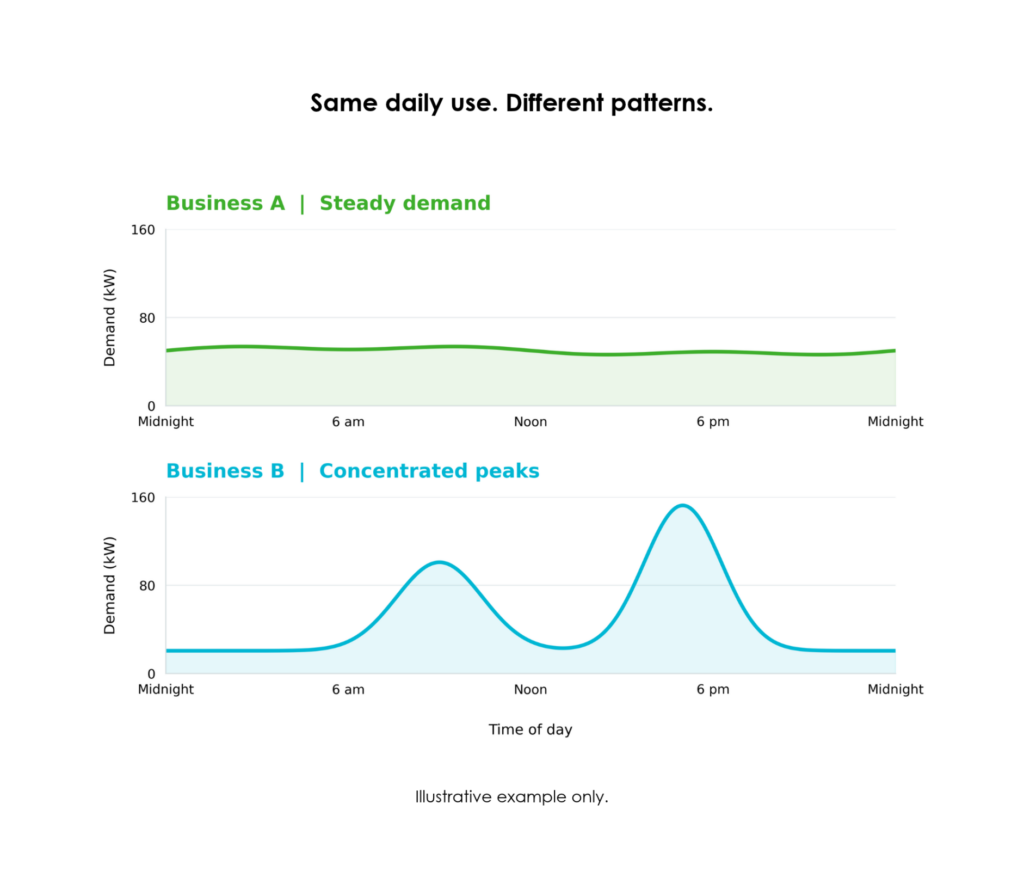

The way you use energy shapes the price you pay

Retailers price the cost and risk of supplying your specific energy profile.

That means two businesses using the same amount of electricity can receive very different offers depending on when they use energy, how consistent that consumption is, when they go to market and how their contract is structured.

For larger energy users, simply comparing multiple retailer quotes can leave significant value on the table.

Better energy costs come from two places: a smarter contract and smarter usage.

When you contract matters. Market prices move, and poor timing can lock higher costs into your contract for years.

How you contract matters. Different structures offer different levels of certainty, flexibility and exposure to market movements.

When you use energy matters. High consumption during expensive periods can increase the cost built into your retail offer.

How consistently you use it matters. Volatile demand and unexpected peaks can increase the risk premium retailers apply.

WHY CHOOSE NRG-ONE

The NRG-ONE difference

Most business energy brokers focus on finding a better retail offer. NRG-ONE looks at the energy position behind the offer.

We analyse how and when your businesses uses electricity, assess market conditions and contracting structures, create competition between retailers and identify opportunities to improve the load profile being priced.

That might mean changing when or how you contract. It could also mean shifting demand, optimising tariffs, improving efficiency or introducing solar and storage where the commercial case supports it.

The result is a procurement strategy built around your business, not just the cheapest rate available on the day.

Load-shape analysis
We analyse interval data to understand when your business uses electricity, where peaks occur and how your consumption profile affects retailer pricing.

Procurement strategy
We monitor market conditions and develop a clear strategy for when and how your business should go to market.

Contract and retailer evaluation
We compare contracting structures against your appetite for cost certainty, flexibility and market exposure, then run a structured competitive tender between retailers and evaluate the offers.

Energy optimisation
We look beyond the contract to identify tariff, load-shape and onsite energy opportunities that could improve both current costs and future procurement outcomes.

“NRG-ONE helped us secure cheaper rates and delivered real savings – over $5,000 every month. Their expertise and proactive approach made a big difference.”

– Mark Davie, Director, Keppel Foods

HOW WE WORK

Energy procurement starts with understanding your energy position

We analyse how your business buys and uses energy, then take the right procurement strategy to market. That work can also reveal opportunities to improve your energy position through solar, battery storage, electrification or other energy projects.

Understand your energy position
Assess your existing contract, network tariff, interval data, usage patterns, future requirements and commercial objectives.

Build the procurement approach
Assess market conditions, contract timing and structures, understand how your load profile influences retailer pricing and determine the right approach to market.

Go to market and execute
Run the retailer tender, evaluate offers, negotiate commercial terms and support contract execution.

PROVEN RESULTS

$5,000+ saved every month

Keppel Foods was facing rising electricity costs, changing consumption volumes and limited visibility into competitive energy options. NRG-ONE analysed its energy usage and market conditions, identified the optimal go-to-market timing and contracting structure, compared retailer offers, and negotiated more competitive rates with flexible terms. That delivered more than $5,000 in monthly savings, with greater transparency and flexibility built into the contract

Don’t wait until your contract is about to expire.

Starting early gives you more flexibility around market timing, contract structure and retailer negotiation. We recommend reviewing your energy contract around 12 months before expiry.

Name(Required)

FREQUENTLY ASKED QUESTIONS

Business energy procurement FAQs


What is business energy procurement?

Business energy procurement is the process of deciding when, how and from whom your business contracts wholesale electricity or gas. For larger commercial and industrial energy users, that means assessing market conditions, retailer offers, contracting structures, tariffs and your own usage profile – not simply comparing headline electricity rates.

What is the difference between NRG-ONE and an energy broker?

A traditional energy broker focuses on comparing retailer offers. NRG- ONE approaches procurement from an energy management perspective. We analyse your interval usage, load shape, tariff, market timing and contracting options before going to market.

Where appropriate, we also identify operational, efficiency, solar and storage opportunities that could improve the energy profile retailers are being asked to price. Because NRG-ONE is an energy services contractor, we can also bring real and accurate project delivery costs into the conversation and recommend solutions that support the broader energy outcome for your business.

Think of it as an end-to-end approach to improving your energy position.

What size business is energy procurement suitable for?

NRG-ONE’s business energy procurement service is designed for medium and large commercial and industrial energy users. As a guide, the service is generally suited to businesses consuming around 1 GWh or more of electricity per year or 20,000 GJ of gas, with particular value for organisations with significant energy expenditure, multiple sites or more complex load profiles.

When should we start reviewing our next electricity contract?

Ideally, procurement planning should begin 12 months before your current contract expires. Energy market conditions change continually, and going to market at the wrong time can expose your business to higher costs for the contract term. Starting early gives you more flexibility around timing, strategy and retailer engagement.

Why does our load shape affect our electricity price?

Retailers consider both how much electricity you use and when you use it. Consumption concentrated in expensive periods, or unpredictable peaks in demand, can be harder for a retailer to forecast and hedge. That additional risk can influence the premium built into an offer. As renewable generation continues to reshape market price patterns, businesses may also have new opportunities to optimise when they use or purchase energy.

Can we reduce energy costs without changing retailer?

Potentially. A better contract is only one part of the opportunity. Changes to network tariffs, operating schedules, energy efficiency, onsite generation or battery storage can also change how much grid energy you use and when you use it. NRG-ONE considers both the contract and the underlying energy profile.

Do you negotiate directly with energy retailers?

Yes. NRG-ONE can run the competitive retailer tender, evaluate offers, negotiate commercial terms and support contract execution.

How do I get a solar and battery storage system funded through grants or incentives in Australia?

No. Different contracts offer different levels of cost certainty, flexibility and exposure to market movements. We evaluate the broader commercial outcome rather than selecting an offer based purely on the lowest headline rate.

Can solar or battery storage improve our procurement outcome?

Potentially. Battery storage can shift grid consumption away from more expensive periods, while onsite generation can reduce demand from the grid altogether. Flexible operations and efficiency improvements can also change the load profile retailers are being asked to price. NRG–ONE can assess these opportunities as part of the wider energy strategy rather than treating procurement in isolation.